Politeness You Cannot Translate – Hidden Social Rules Inside Everyday Phrases
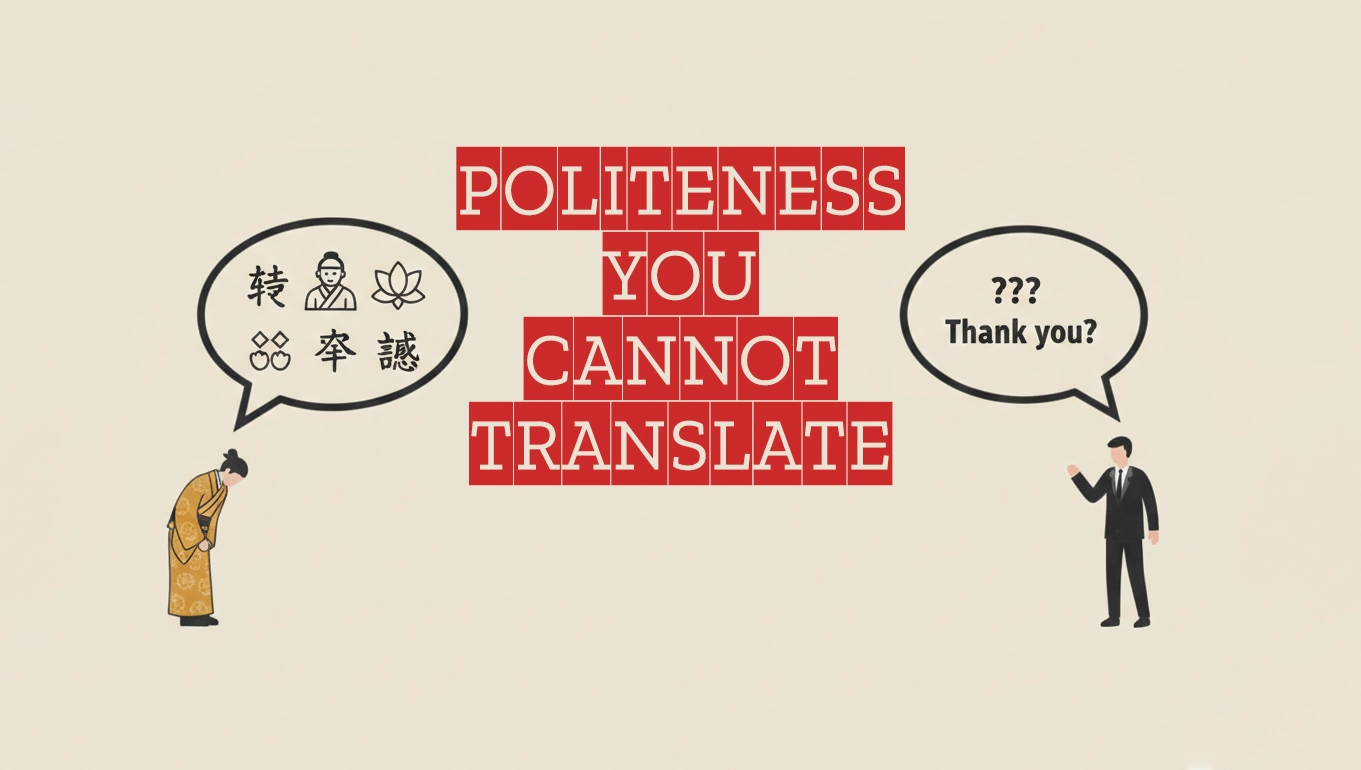
Language is often described as a bridge between cultures. Learn the words, the grammar, the pronunciation—and you should be able to communicate. Yet many fluent speakers discover an uncomfortable truth: even when the words are correct, something still feels off. The problem isn’t vocabulary. It’s politeness.
Politeness is one of the hardest things to translate because it doesn’t live only in words. It lives in shared assumptions, social hierarchies, and unspoken rules about what should be said, when, and how. Everyday phrases that seem simple on the surface can carry hidden social instructions that outsiders miss entirely.
1. “We should get coffee sometime.”
To a language learner, this sounds like a clear invitation.
In many English-speaking cultures, however, this phrase often functions as polite closure, not a real plan. It signals friendliness without commitment.
- Literal meaning: Let’s meet for coffee.
- Social meaning: I like you, but I’m not scheduling anything.
A direct response like “Great! How about Tuesday at 3?” can feel awkward—not because it’s wrong, but because it breaks the shared understanding that the phrase was intentionally vague.
In other cultures, vague invitations are rare. If you suggest meeting, you mean it. Translating the phrase without the social rule leads to mismatched expectations and quiet confusion.
2. “No problem.”
This phrase appears friendly and casual, yet it carries cultural weight.
In American English, “No problem” often means:
- You didn’t inconvenience me
- I’m relaxed and easygoing
- You don’t owe me anything
But in some cultures, saying the equivalent of “no problem” after being thanked can sound strange or even rude. The hidden rule there is that help is expected, and denying the effort may seem dismissive.
Compare:
“You’re welcome” → acknowledges social obligation
“No problem” → minimizes the cost
Neither is universally polite. Each belongs to a specific social logic.
3. “With all due respect…”
This phrase is a classic politeness trap.
On paper, it signals respect. In practice, it often announces disagreement—or even criticism.
“With all due respect, I think you’re wrong.”
Native speakers hear the warning immediately. The phrase softens the blow while confirming that a blow is coming. Non-native speakers may use it sincerely, unaware that it often sounds confrontational.
The politeness isn’t in the words themselves—it’s in knowing when not to use them.
4. Silence as politeness
Some cultures treat silence as uncomfortable. Others treat it as respectful.
In Japan or Finland, pausing before answering can signal thoughtfulness. Interrupting too quickly may appear rude. In contrast, in cultures that value verbal engagement, silence may be interpreted as disinterest or awkwardness.
You cannot translate silence. You can only learn when it is expected.
5. “Maybe” doesn’t always mean maybe
In some languages, refusing directly is impolite. So people soften “no” into:
- “Maybe”
- “We’ll see”
- “That could be difficult”
To outsiders, these sound like uncertainty. To insiders, they are clear refusals.
The politeness rule here is about preserving harmony, not clarity. A direct “no” may damage relationships, while a vague answer allows everyone to save face.
6. Compliments and denial rituals
In English, accepting a compliment with “Thank you” is polite.
In other cultures, immediate acceptance may sound arrogant. Politeness requires denial:
- “Oh no, it’s nothing.”
- “I’m not that good.”
The hidden rule is about modesty. The compliment isn’t just praise—it’s a social test. The correct response proves you understand your place in the group.
Why politeness resists translation
Politeness is not universal kindness. It is culturally negotiated behavior. What counts as respectful in one language may sound cold, dishonest, or excessive in another.
This is why advanced language learners still make “mistakes” that textbooks never mention. They follow grammar rules but miss social ones.
To truly understand a language, you must listen not only to what is said, but to:
- What is left unsaid
- What is softened
- What is avoided
- What is implied
Final thought
You can translate words.
You can explain grammar.
But politeness lives between the lines.
Learning it requires observation, humility, and the willingness to feel confused—sometimes for years. And perhaps that’s the ultimate hidden rule: politeness is less about speaking correctly and more about learning how to belong.
Back to blog