PDF, PDF/VT, and PDF/X: Key Differences
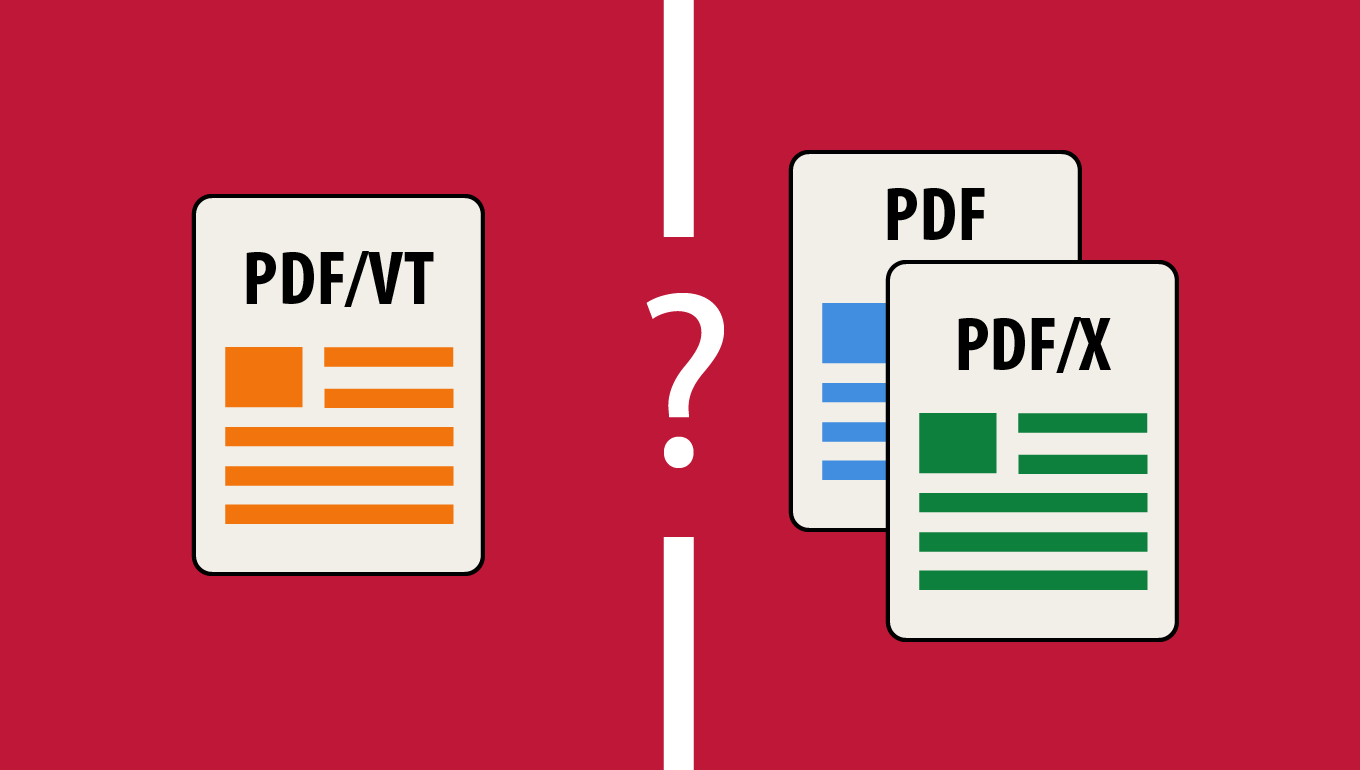
In the world of digital documents and printing, various PDF formats serve different purposes. While standard PDF is widely known, PDF/VT and PDF/X address specific needs in the printing industry. Let's explore these formats and their key differences.
What is PDF/VT?
PDF/VT is a specialized version of PDF designed for variable and transactional printing. The 'VT' stands for 'Variable and Transactional'. Introduced in 2010, PDF/VT aims to combine the benefits of PDF with the needs of high-volume, personalized printing.
What is PDF/X?
PDF/X is a subset of the PDF format designed for the printing industry. The 'X' stands for 'eXchange'. It was created to solve issues in the print production workflow, ensuring that files will print correctly by setting specific standards.
Key Differences
1. Purpose
- PDF: General document sharing and viewing.
- PDF/X: Designed for standard print production and exchange.
- PDF/VT: Optimized for variable data and transactional printing.
2. Variable Data Support
- PDF: Limited support for variable content.
- PDF/X: No specific support for variable data.
- PDF/VT: Built-in support for efficient handling of variable data.
3. Document Structure
- PDF: Single, static document.
- PDF/X: Single document with strict guidelines for print readiness.
- PDF/VT: Can contain multiple records for personalized printing.
4. Color Management
- PDF: Supports various color management approaches.
- PDF/X: Strict color management rules, often requiring CMYK.
- PDF/VT: Requires consistent color management across all elements.
5. Transparency
- PDF: Allows unrestricted use of transparency.
- PDF/X: Earlier versions prohibit transparency; newer versions have strict rules.
- PDF/VT: Has specific rules for handling transparency in variable data.
6. Standards Compliance
- PDF: No specific printing standards required.
- PDF/X: Must meet ISO standards for printing.
- PDF/VT: Must comply with PDF/X-4 and additional VT-specific standards.
Conclusion
While both PDF/VT and PDF/X are designed for the printing industry, they serve different needs. PDF/X focuses on ensuring print-ready files for traditional printing, while PDF/VT is specifically tailored for variable data printing. PDF/VT actually builds upon PDF/X standards, adding features for efficient handling of variable and recurring content.
PDF/X ensures consistency and reliability in standard print jobs, making it ideal for magazines, brochures, and other static print materials. PDF/VT, on the other hand, excels in scenarios requiring mass customization, such as personalized direct mail campaigns or individualized statements.
In essence, PDF/VT can be seen as an extension of PDF/X, combining its print-readiness features with advanced capabilities for variable data handling. This makes PDF/VT the format of choice for print providers dealing with high-volume, data-driven, personalized print jobs.
Back to blog