Lost in Translation: When Humour Doesn't Travel
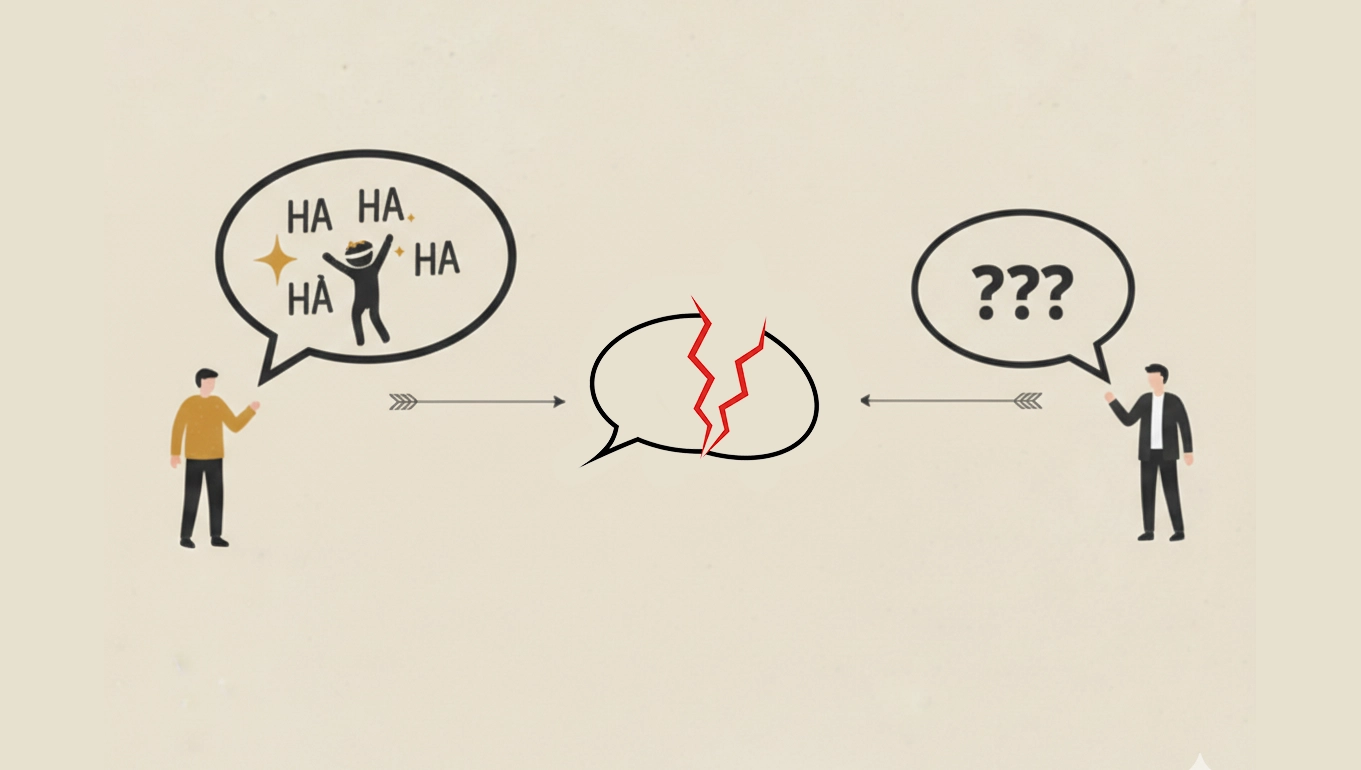
Humour looks effortless when it works. A single sentence can make an entire room laugh. But try to move that same joke into another language, and it often falls flat—or worse, becomes confusing or offensive. This is why translators frequently say that humour is not just difficult to translate; it is sometimes impossible to translate literally.
This article explores why humour resists translation and shows, through practical examples, what exactly gets lost—and how skilled translators try to save it.
1. Humour Is Built on Language Itself
Many jokes depend on how a language sounds, spells words, or allows ambiguity. When those features don’t exist in the target language, the joke collapses.
Example: Wordplay and Puns
English joke: "I used to be a banker, but I lost interest."
The humour relies on the double meaning of interest (financial vs. emotional). In many languages, these meanings use completely different words.
Literal translation result:
The sentence becomes logical but unfunny—because there is no ambiguity to trigger the joke.
What translators do instead:
They may replace the joke with a different profession and a different wordplay that works in the target language. The meaning changes, but the laughter survives.
This is one of the translator’s biggest dilemmas: Do you preserve the words, or the effect?
2. Cultural References Don’t Travel Well
Humour often assumes shared knowledge: TV shows, stereotypes, history, politics, or social habits. When the audience doesn’t share that background, the joke becomes meaningless.
Example: Pop Culture Humour
English joke: "He’s about as reliable as Windows Vista."
For audiences unfamiliar with Microsoft’s software history, this comparison says nothing.
Literal translation result:
Readers understand the sentence, but not why it’s funny.
Practical solution:
A translator might substitute a locally infamous product, service, or public figure known for unreliability. The joke changes, but the reaction remains.
3. Timing and Rhythm Are Language-Specific
Comedy depends heavily on timing—sentence length, word order, and where the punchline lands. Languages structure sentences differently, which can ruin the buildup.
Example: Punchline Placement
English joke: "I told my wife she was drawing her eyebrows too high. She looked surprised."
The punchline works because surprised comes at the very end.
In some languages:
Grammar may force the adjective earlier in the sentence, exposing the punchline before the setup is complete.
Result:
The joke technically survives, but the laugh arrives too early—or not at all.
4. Humour Is Deeply Cultural
What one culture finds hilarious, another may find rude, boring, or incomprehensible.
Example: Sarcasm
English joke: "Oh great, another meeting. Exactly what I needed today."
In cultures where communication is more direct, this may be interpreted as genuine enthusiasm rather than sarcasm.
Translation risk:
The joke turns into a sincere statement.
Translator’s workaround:
They may exaggerate the tone or add contextual cues to signal irony—even if that means adding words not present in the original.
5. Dialects, Accents, and Slang Rarely Have Equivalents
Comedians frequently rely on regional accents, street slang, or social dialects.
Example: Accent-Based Humour
A joke mocking a British, Southern American, or Brooklyn accent cannot simply be “translated” into another language.
Literal translation result:
The joke loses its target.
Creative adaptation:
A translator might replace the accent with a local dialect that carries similar social connotations—rural, elite, uneducated, pretentious, etc.
Again, accuracy gives way to effect.
6. When Translation Chooses Silence
Sometimes, translators deliberately remove jokes.
This happens when:
- The joke cannot be adapted
- The humour depends on offensive stereotypes
- The cultural gap is too wide
In subtitles, for example, space constraints make long explanations impossible. A joke that needs footnotes is no longer a joke.
7. So How Do Good Translators Handle Humour?
Professional translators treat humour as a function, not a sentence.
They ask:
- What is this joke doing?
- Who is supposed to laugh?
- Why is it funny here?
Then they recreate that function in the target language—even if the words, reference, or structure change completely.
In practice, this means:
- Replacing puns with new ones
- Swapping cultural references
- Changing sentence structure
- Occasionally inventing an entirely new joke
Conclusion: Humour Isn’t Translated—It’s Rewritten
When translation kills the joke, it’s usually because humour was treated like ordinary text. But humour is performance, culture, and psychology wrapped into language.
A perfect translation of a joke is not one that mirrors the original words, but one that produces the same laugh.
And sometimes, the bravest—and most professional—choice a translator can make is to admit: this joke doesn’t cross borders without help.
That’s not failure. That’s understanding what humour really is.
Back to blog