False Friends in Translation: Words That Mislead
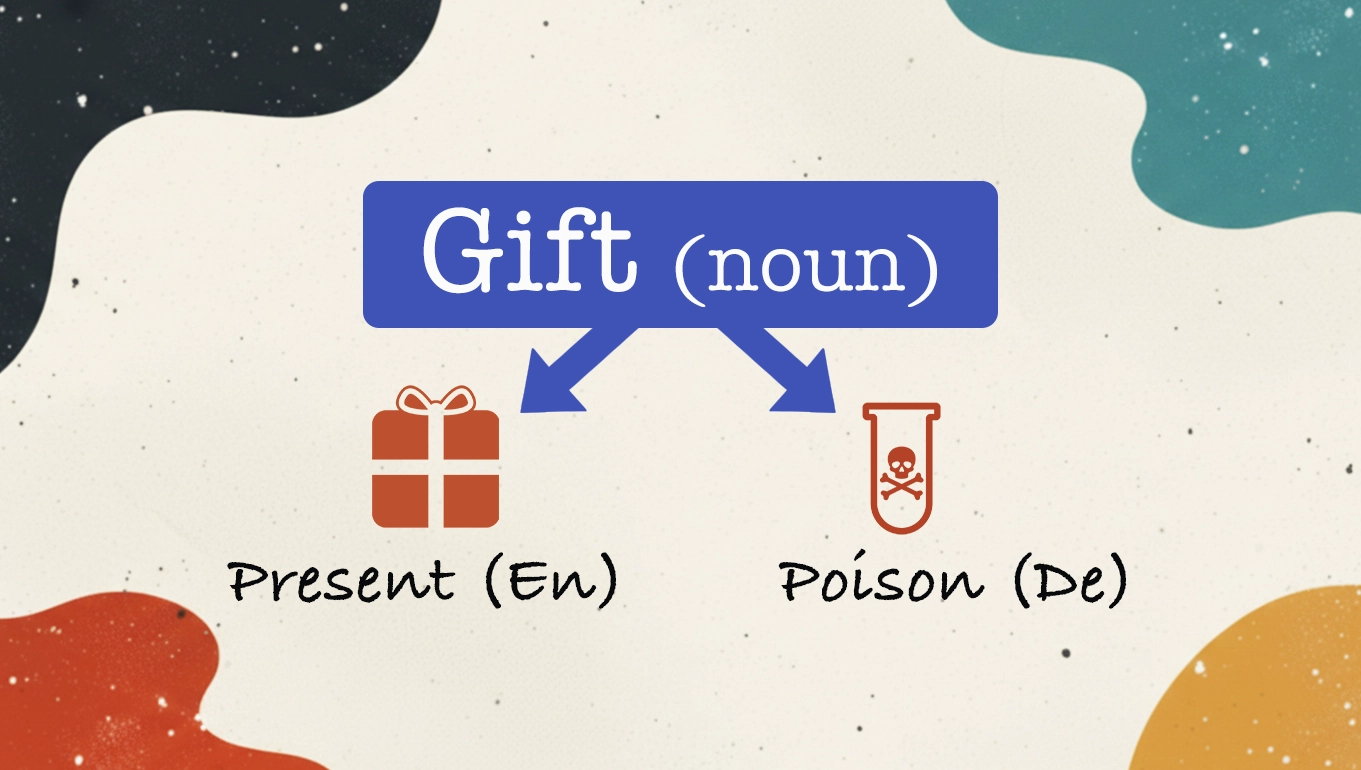
Language is full of little traps, and few are as sneaky as false friends. These are words that look or sound familiar across different languages but carry completely different meanings. They lure learners into a false sense of confidence—only to betray them at the worst possible moment, often in the middle of an important conversation, email, or translation task.
False friends are especially common between languages that share historical roots, such as English and French, Spanish and Portuguese, or German and Italian. Because these languages evolved side by side, many words resemble one another on the surface, even though their meanings have drifted apart over time.
What Are False Friends?
A false friend (from the French term faux amis) is a word in one language that resembles a word in another language but does not share the same meaning. Unlike loanwords or cognates—which truly overlap in meaning—false friends only pretend to be helpful.
For example, the English word “actual” means real or current. In Spanish, “actual” means current, not real. A Spanish speaker saying “the actual problem” in English may really mean “the current problem”—and confusion follows.
Why False Friends Are So Dangerous
False friends are more treacherous than completely unfamiliar words because they bypass our natural caution. When we encounter a word that looks familiar, we assume we understand it and stop paying attention. This can lead to:
- Misunderstandings in conversation
- Embarrassing mistakes in professional settings
- Incorrect translations in writing
- Loss of credibility for translators and language learners
In some cases, the mistake is harmless. In others, it can dramatically change the meaning of a sentence—or even offend someone.
Classic False Friends Across Languages
Here are some well-known false friends that regularly cause trouble. They are organized by language pair for clarity and ease of reference.
English–French
- Actuellement → currently, not "actually"
- Librairie → bookstore, not "library"
- Éventuellement → possibly, not "eventually"
- Compréhensif → understanding, not "comprehensive"
- Assister → to attend, not "to assist"
English–Spanish
- Embarazada → pregnant, not "embarrassed"
- Sensible → sensitive, not "reasonable"
- Constipado → having a cold, not "constipated"
- Éxito → success, not "exit"
- Lectura → reading, not "lecture"
English–German
- Gift → poison, not "a present"
- Bald → soon, not "hairless"
- Chef → boss, not "cook"
- Brief → letter, not "brief"
- Kamera → camera, not "courtroom" (in English)
English–Portuguese
- Pretender → to intend, not "to pretend"
- Puxar → to pull, not "to push"
- Eventualmente → possibly, not "eventually"
English–Italian
- Parenti → relatives, not "parents"
- Attualmente → currently, not "actually"
- Libreria → bookshop, not "library"
- Simpatico → nice or likeable, not "sympathetic"
- Agenda → diary or planner, not "agenda" in the English sense
Professional Translation Pitfalls
Some false friends appear frequently in business, legal, or technical contexts, making them particularly dangerous for translators:
- Policy → company rules vs politics (ES/PT: política)
- Resume → to continue vs CV (FR: résumé)
- Eventually → a classic false friend in multiple languages
These examples show that false friends can cause subtle but significant errors if not caught in time.
How False Friends Are Born
False friends usually arise because languages evolve at different speeds and in different directions. A word may start with the same meaning in two languages, but over centuries, one language shifts while the other stays put. Cultural changes, borrowings from other languages, and shifts in usage all contribute to this semantic drift.
Ironically, the closer two languages are, the more false friends they tend to have.
How to Protect Yourself from False Friends
While false friends can’t be eliminated, they can be managed:
- Be suspicious of familiarity
If a word looks too easy, double-check it—especially in professional translation or formal writing. - Learn false friends in groups
Studying common false friends together makes them easier to remember. - Pay attention to context
When a sentence doesn’t quite make sense, a false friend may be hiding in it. - Make mistakes (and note them)
The embarrassment of a false friend often makes it unforgettable—in a good way.
False Friends as Learning Allies
Despite their reputation, false friends aren’t purely enemies. They reveal fascinating stories about how languages grow apart and reflect centuries of cultural exchange. Once recognized, they sharpen your awareness and push you toward more precise communication.
In the end, false friends only betray those who trust them blindly. Learn to recognize them, respect their differences, and they lose their power—transforming from linguistic traps into valuable teachers.
Back to blog