Digital vs Electronic Signatures: Key Differences
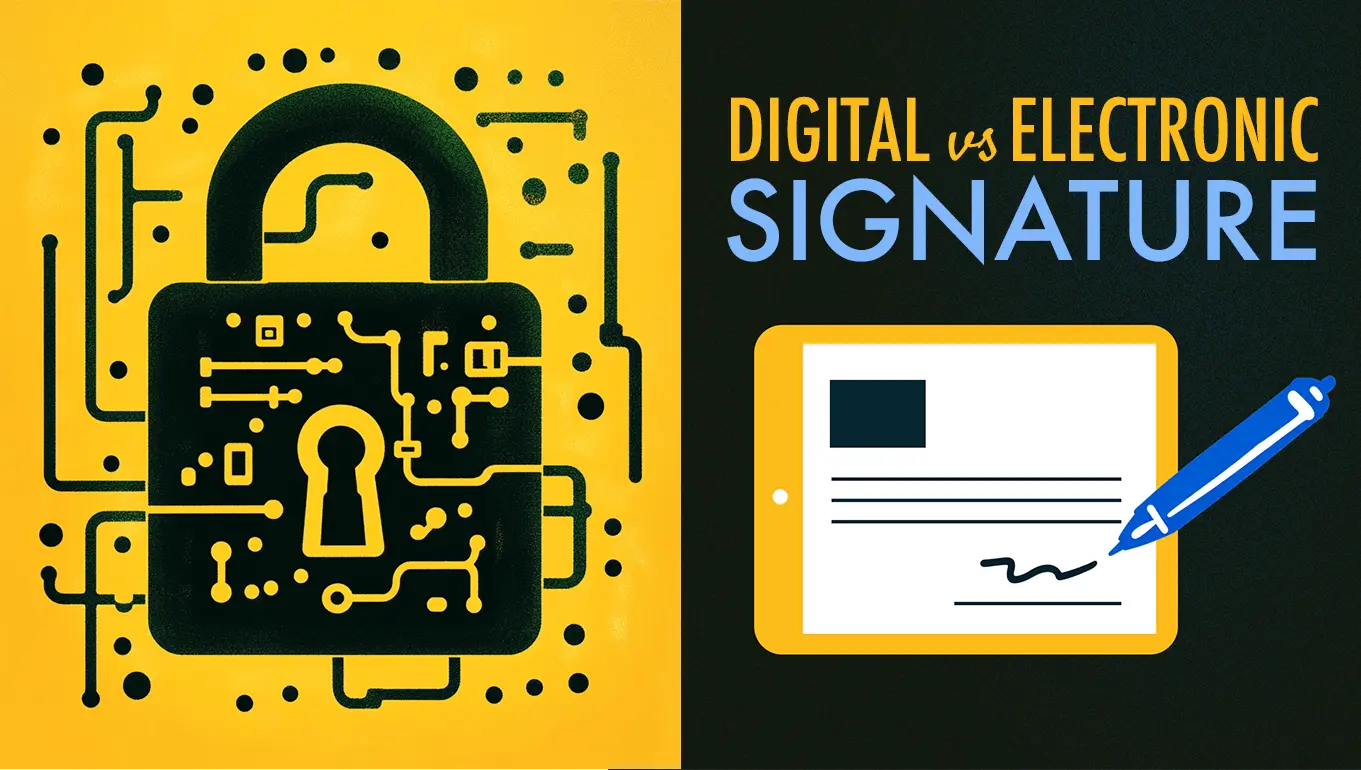
In today's digital age, remote document signing has become increasingly important. Two common terms in this context are "electronic signatures" and "digital signatures." While often used interchangeably, these terms refer to distinct concepts with significant differences.
Electronic Signatures
Electronic signatures refer to any electronic process that indicates acceptance or approval of document contents. Examples include:
- Typing your name at the end of an email
- Clicking an "I agree" button on a website
- Using a touchscreen to draw your signature
The key aspect of an electronic signature is the intent to sign, rather than the specific method used.
Digital Signatures
Digital signatures are a specific subset of electronic signatures that use cryptographic technology to provide enhanced security features. They employ encryption to associate a unique digital fingerprint with the document and the signer.
Key Differences
1. Security Features
- Electronic signatures are generally easier to implement and use but may not provide high-level security.
- Digital signatures offer enhanced security, detecting document alterations and verifying signer identity.
2. Legal Standing
Both are generally considered valid in many jurisdictions. However, digital signatures often meet more stringent legal standards due to their enhanced security features.
3. Implementation
- Electronic signatures: Typically straightforward, often possible with existing software.
- Digital signatures: Usually require specialized software and sometimes hardware (e.g., smart cards, USB tokens).
4. Use Cases
- Electronic signatures: Suitable for a wide range of everyday transactions.
- Digital signatures: Particularly useful for high-value transactions, sensitive documents, or in industries with strict regulatory requirements.
Choosing Between Electronic and Digital Signatures
Factors to Consider:
- Specific use case
- Industry requirements
- Risk assessment
- Implementation costs
- Required level of security
Conclusion
While both electronic and digital signatures indicate approval or acceptance of a document, they differ significantly in implementation, security features, and often in legal weight. Understanding these differences is crucial for making informed decisions about which type of signature to use in various situations.
Back to blog